We are currently looking for expressions of interest for our 2026 year long course in seed production. See our training page for more information and get in touch via the email above.
Events are also advertised via our social media channels listed above, where we also share other regional opportunities. If you’d like us to spread the word about your own seed event please drop us a line by email.
As across the Programme, our seed politics and practice training is the core of our work here in the Southeast and we are lucky to run them in collaboration with some of the most inspiring growers, trainers and projects across the region.
We offer in-depth introductory programmes, equipping participants from community and commercial backgrounds with the theory and practice to get going with seed saving, either over four-weeks online or over the course of a day in-person.
We launched our first intermediate year-long seed production training in Autumn 2022. This is a hybrid training, partially online and partially on farms across the South East, giving participants a thorough grounding in how to incorporate seed production into their growing and businesses.
Get in touch if you are interested in either of these training opportunities.


When we think of seed sovereignty, we rarely think of urban spaces yet in cities across the UK and Ireland, seed savers are actively building urban crop diversity. The diversity of people which characterises our cities is reflected in the crops grown there, much of this thanks to migrant communities which have brought seeds from across the world building rich cultural, culinary and crop diversity to our cities. This film by Andy Pilsbury sheds light on the seed sovereignty movement in London.
Guildford Seed Bank was launched in 2021. The collective is made up of home gardeners and allotment holders, with contributions from local small-scale commercial veg and flower growers based in SW Surrey and East Hampshire. Members grow 2 – 3 crops annually and the seed is distributed to the community via local libraries, schools and at the Surrey Seed Swap.
Hodmedods is a Suffolk based company working with farmers to bring traditional and new pulses and grains to the market. They focus particularly on rare, native foods like fava beans, black badger peas and quinoa.
London Freedom Seed Bank is a network of food growers and gardeners in London dedicated to saving, storing and sharing open-pollinated seed. For the past decade, they have built a large, living collection of London-grown seed and an enthusiastic network of growers passing on the skills of saving seed.
Open Pollinated Seeds is an initiative established to spread awareness about the importance of natural propagation and regeneration of vegetable seeds. The organisation provides training, information and insight around seed production, biodiversity and food culture. They have also developed a logo to help consumers identify Open Pollinated seeds and produce.
Seedy Saturday is a seed swap held on the first Saturday of February each year in Lewis, Sussex. In addition to swapping seeds there’s a programme of speakers, workshops, children’s activities and stalls.
Seedy Sunday Brighton is the UK’s oldest and largest seed swap, hosting between two and three thousand people. The event was established in 2002 and runs on the first Sunday of February each year. Alongside the seed swap table, the event includes diverse speakers, over fifty community and commercial stalls, children’s activities and a pop-up café.
South East Grain Alliance is a regional arm of the UK Grain Network, connecting farmers bakers and millers interested in working together using locally grown alternative grains, instead of modern commodity varieties.
Wakelyns is an organic agroforestry, food and horticulture hub in Suffolk. Particularly known for Martin Woolf’s work producing the YQ and Q Population Wheat, it’s also one of the longest-established agroforestry farms in the UK.
Waltham Place is a 220-acre organic and biodynamic estate in Berkshire, working to build biodiversity through mixed farming with livestock, cereals and commercial vegetable seed production, to create a sustainable and balanced farming system. They hold courses throughout the year on farming and gardening including seed saving.

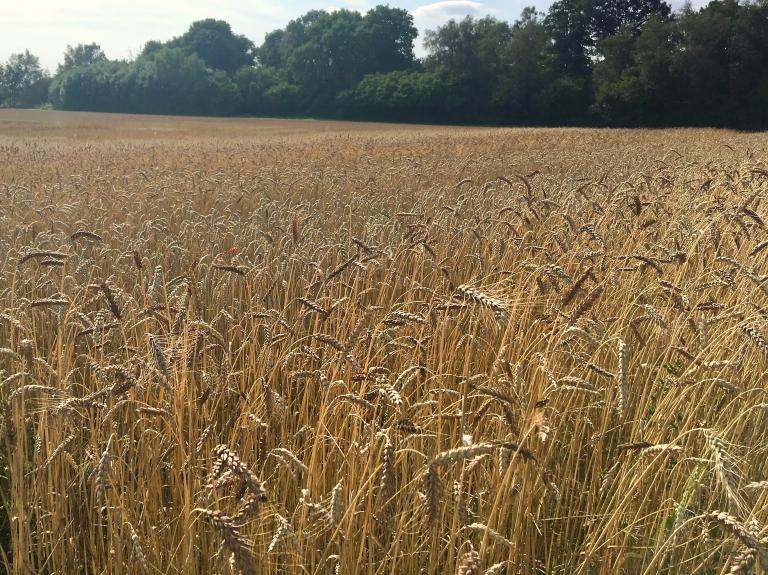
South West Grain Network are a group of bakers, millers and farmers and supporters who are taking active steps into an alternative grain economy, one that is human scale, non-commodity and grounded in friendship and collaboration. This network has grown in both number and strength since its formation; holding regular online and in person gatherings to solidify the networks aims and purpose.
Instagram: @swgrainnetwork
South West Seed Savers: The South West Seed Savers’ Network is a group of small-scale, agroecological growers based across South West England who have been coming together since 2017.
‘We want to protect and increase crop diversity and grow varieties that are exciting, tasty and productive whilst also preserving the knowledge of seed saving. We welcome commercial growers from the South West with any level of experience in seed saving. Enthusiasm for seeds is a must!’ – South West Seed Savers
The group are building seed sovereignty by growing and exchanging seeds and sharing skills and knowledge within the group. They’re currently attempting to grow seed to supply group members with 25 of the most popular varieties. In some areas there are also local seed study groups, in which growers meet up for the evening and talk seeds.
Cornish Seed Savers: The Cornish seed savers are a freshly formed group of growers who run peer-to-peer sessions on different aspects of seed saving.
“Cornwall is on fire!!” – Robyn Minogue, Seed Sovereignty Coordinator for South West England
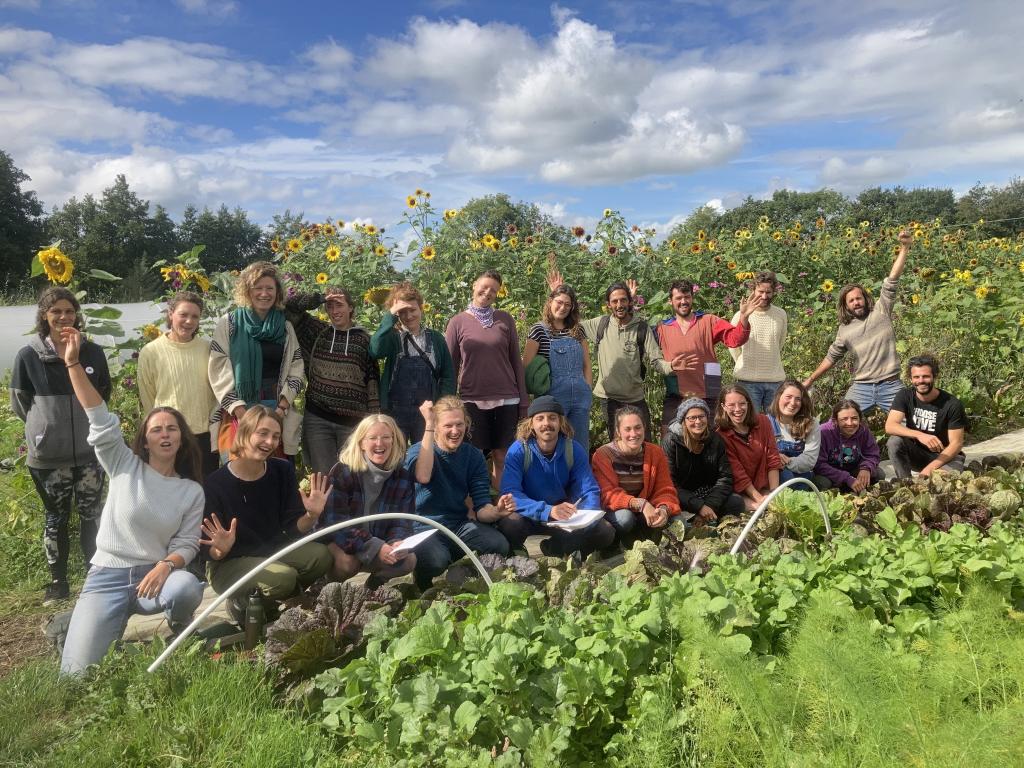
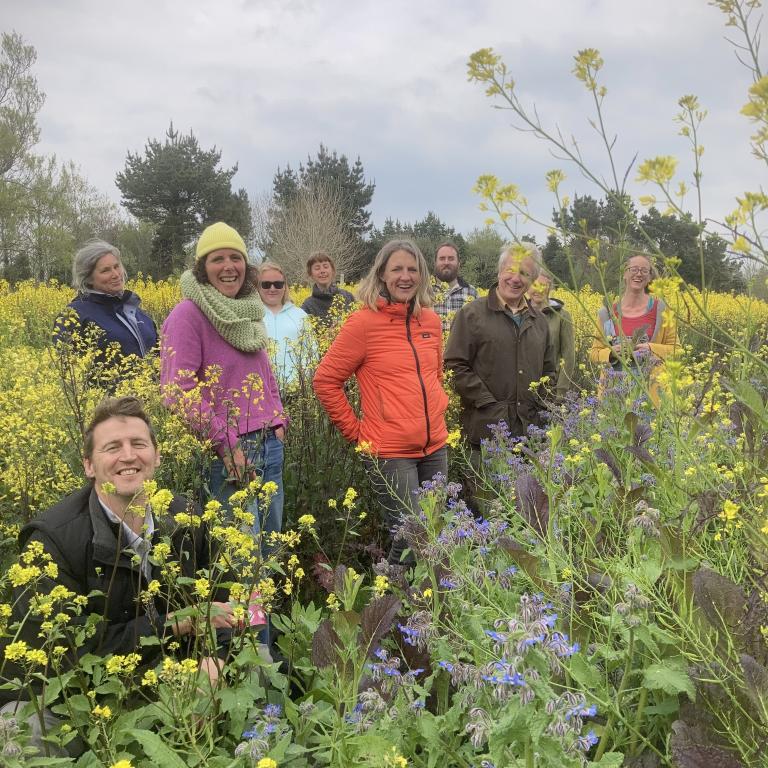
Exeter Seed Bank: Aiming to share knowledge about seed saving with the city and revive this ancient craft in the face of diminishing seed diversity. They are creating a seed bank that works for local climate and soil while protecting against biodiversity loss and climate change.
The Stroud Community Seed Bank (AKA Down to Earth Stroud): A team of volunteer seed guardians growing vegetables, herbs and flowers for seed in the back gardens, allotments and community plots of Stroud. Since 2016, the seed bank has gone from strength to strength and now offers a large range of locally grown seed.
Vital Seeds: Devon based seed company committed to growing and selling open pollinated, locally adapted seed.
Plant Genesis: Cornwall based seed company supplying flower and herb seeds to gardeners, nurseries and other growers. As primarily a seed distributor they are looking for local growers to grow seed for them, while also looking to transition to growing their own seed.
Earth Song Seeds: South West seed company specialising in medicinal herbs with a commitment to growing in a way that nurtures nature as well as self.
Beans and Herbs: Wiltshire based seed company producing a range of organic heritage bean and herb seeds
Sea Spring Seeds: – Dorset based seed company selling small packets of high-quality seed aimed at the home gardener market. They have a great range of seed varieties on offer, especially a tantalising list of chilli seed!